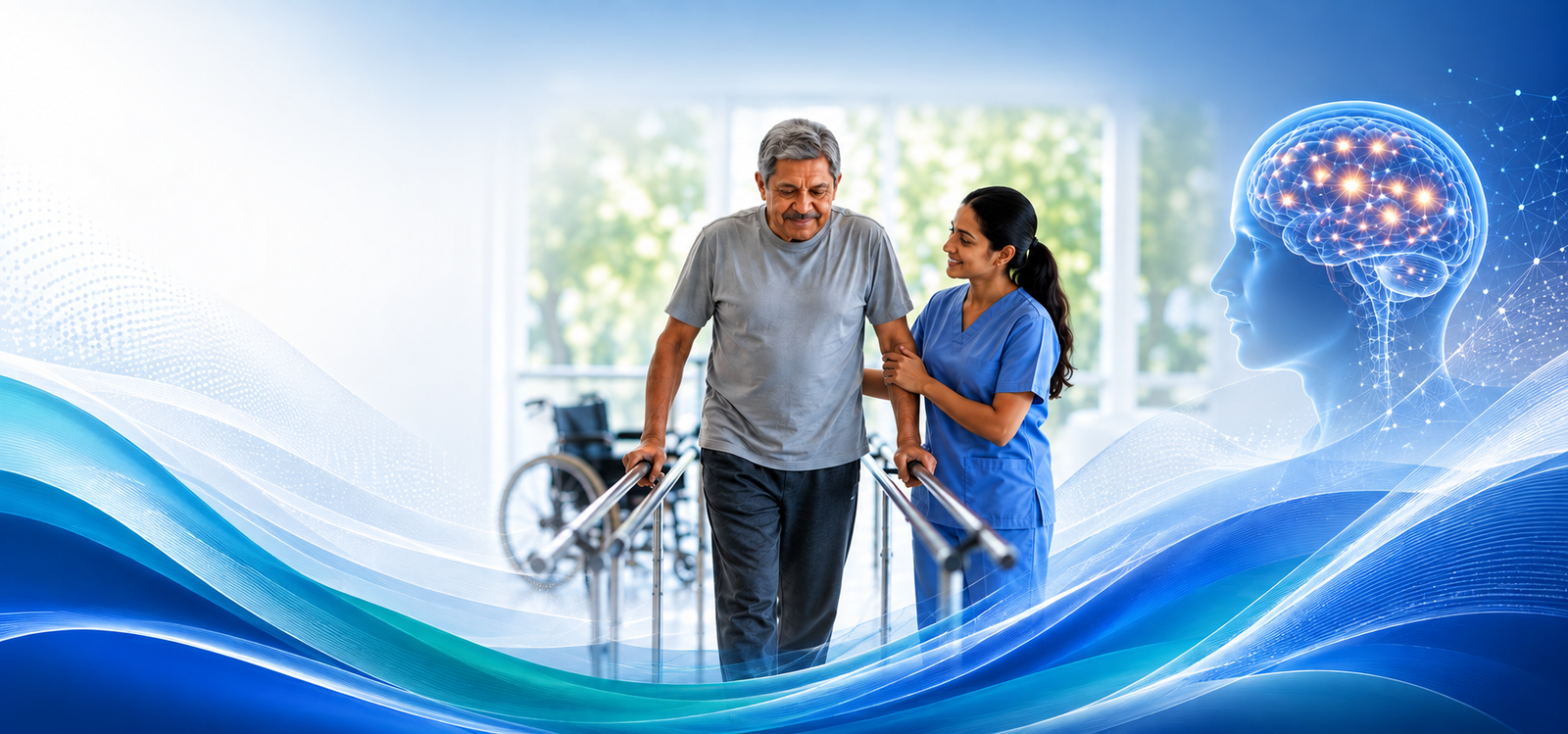
A stroke can change life in an instant. But recovery does not end when the emergency treatment is over or when the patient leaves the hospital.
For many stroke survivors, life after stroke is the beginning of a new journey, one that may involve rehabilitation, adapting to changes, regaining lost abilities and gradually rebuilding independence.
With the right medical care, rehabilitation and support, many people can continue to make meaningful progress after a stroke. The journey is different for every individual, but having the right care plan can make a significant difference.
What Happens After a Stroke?
A stroke occurs when blood flow to part of the brain is interrupted, either because of a blockage or bleeding. Since different areas of the brain control different functions, the effects of a stroke can vary widely.
A survivor may experience:
- Weakness or paralysis, often affecting one side of the body
- Difficulty walking or maintaining balance
- Problems with speech or understanding language
- Difficulty swallowing
- Changes in memory, concentration or thinking
- Vision problems
- Fatigue
- Emotional or behavioural changes
Not every stroke survivor experiences all of these problems. The nature and extent of recovery depend on several factors, including the area of the brain affected, the severity of the stroke, overall health and the rehabilitation received.
Why Is Post-Stroke Rehabilitation Important?
Stroke rehabilitation is not simply about physical recovery. It is about helping a person regain as much independence and quality of life as possible.
Rehabilitation may help a survivor relearn skills affected by the stroke, from walking and communicating to eating, dressing and carrying out everyday activities. It can also help the person adapt to abilities that may have changed permanently.
Rehabilitation may include:
1. Physiotherapy
Physiotherapy can help improve strength, balance, coordination, mobility and movement. It may help survivors work towards activities such as sitting, standing, walking and moving safely.
2. Occupational Therapy
Occupational therapy focuses on everyday independence. A survivor may need to relearn how to dress, eat, bathe, write or perform other daily activities.
3. Speech and Language Therapy
A stroke can affect speech, language and swallowing. Speech-language professionals can help address communication difficulties as well as swallowing problems when required.
4. Cognitive Rehabilitation
Some survivors experience changes in memory, attention, concentration or problem-solving. Rehabilitation can incorporate strategies to help manage these challenges.
5. Emotional and Psychological Support
Recovery is not only physical. A stroke can bring frustration, anxiety, changes in mood and difficulties adjusting to a new way of life. Emotional and psychological support can therefore be an important part of comprehensive stroke recovery.
Does Stroke Recovery Stop After a Few Months?
Not necessarily.
Stroke recovery varies considerably from person to person. While some improvements may happen relatively quickly, others can take longer. Rehabilitation may continue after discharge from the hospital and, depending on an individual's condition and goals, may remain relevant months or even years after the stroke.
This is why it is important not to think of recovery as having a fixed deadline.
Small improvements matter too: taking a few more steps, communicating a little more clearly, becoming more independent with daily activities or simply gaining confidence in doing something that once seemed difficult.
The Role of Family in Life After Stroke
A stroke affects more than the person who experiences it. Families and caregivers often become an important part of the recovery journey.
They can support the survivor by:
- Encouraging participation in prescribed rehabilitation
- Helping maintain medical appointments and treatment routines
- Making the home safer and more accessible
- Supporting healthy lifestyle changes
- Being patient with changes in communication or behaviour
- Encouraging independence rather than doing everything for the survivor
- Watching for new or worsening symptoms and seeking medical advice when necessary
Family involvement, when combined with coordinated professional care, can play an important role in the rehabilitation journey.
Preventing Another Stroke
Recovery also involves understanding how to reduce the risk of another stroke.
Depending on the individual's condition, this may include managing blood pressure, diabetes and cholesterol, taking prescribed medicines correctly, following medical advice about diet and physical activity, and addressing other individual risk factors.
A stroke prevention plan should always be personalised by the treating healthcare team.
Choosing the Right Post-Stroke Neuro Care
Because stroke can affect multiple aspects of a person's health, recovery may require a multidisciplinary approach.
A comprehensive post-stroke neuro care programme may involve neurologists, rehabilitation physicians, physiotherapists, occupational therapists, speech and language professionals, psychologists, nurses, nutrition professionals and other specialists depending on the survivor's needs.
The most important question is not simply, “Has the stroke been treated?”
It is also:
“What does this person need to regain the best possible quality of life?”
Life After Stroke: Recovery Is a Journey
Life after stroke may look different from life before it. Recovery can require patience, consistency and support. There may be difficult days, slow progress and unexpected challenges.
But recovery is not defined by one dramatic milestone.
It can be found in the everyday victories: the first independent step, the first clear word, the ability to eat independently, returning to a familiar activity or simply feeling confident enough to try again.
With timely medical care, personalised rehabilitation and a strong support system, stroke survivors can continue working towards greater independence and a better quality of life.
A stroke may change your life. It does not have to define the rest of it.
If you or a loved one has experienced a stroke, speak with a qualified neurologist or rehabilitation specialist to understand the most appropriate care and rehabilitation plan for your individual condition.